

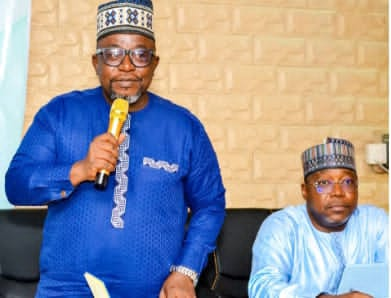
DGI Consult, UNICEF Conclude State-level Leadership Capacity Strengthening Workshops in Adamawa, Sokoto and Kwara States
• Accelerates Improvements in Reproductive, Maternal and Child Health in Nigeria
The United Nations Children’s Fund (UNICEF), in collaboration with Development Governance International (DGI) Consult has successfully completed a series of state-level Leadership, Governance and Management Capacity Strengthening Workshops in Adamawa, Sokoto and Kwara States, marking an important step towards strengthening the leadership, governance and management capacities needed to sustain health gains and accelerate improvements in Reproductive, Maternal, Newborn, Child, Adolescent Health and Nutrition (RMNCAH+N) and Gender-Based Violence (GBV) programme performance in Nigeria.
The three workshops, held in the respective state capitals, formed part of the implementation of state-specific Capacity Strengthening Plans co-created under the Enhancing Leadership, Governance and Management Capacities (ELGMC) Project. The plans were informed by baseline assessments conducted across key health institutions in the three states, which identified both existing strengths and critical gaps in leadership, governance and management affecting programme implementation and performance. The ELGMC Project is implemented by DGI Consult as part of the Strengthening Access to Reproductive and Adolescent Health (SARAH) Project, jointly implemented by UNICEF and the United Nations Population Fund (UNFPA). The SARAH Project is a four-year initiative funded by the European Union, and it is being implemented in the three states as part of a broader commitment to strengthening health systems in Nigeria.
Across the three states, the workshops brought together senior government officials, heads of health institutions, programme managers, local government representatives, development partners and other key stakeholders. The strong participation of senior health leadership demonstrated government ownership of the intervention and provided an opportunity to align stakeholders around shared priorities for improved programme performance.
In a release obtained by Salient Reporters, the Communication and Knowledge Management Specialist for Development Governance International Consult, Wole Alawode noted that the workshops were delivered through a highly interactive, competency-based, and solution-focused approach that encouraged participants to analyze real health system challenges, share experiences, and develop practical solutions for improving RMNCAH+N and GBV programme performance in the states. ” Through technical presentations, practical exercises, group work and plenary discussions, participants examined priority leadership, governance and management challenges and explored practical approaches to address them. Key areas of focus included visioning and strategic planning, coordination, results-based management, financial management, human resources for health, resource optimization and the use of data for decision-making,” he said.
Across the three states, participants also developed a shared RMNCAH+N Vision and explored using the draft RMNCAH+N Results Framework developed at the workshop to translate shared priorities into measurable results, strengthen accountability, and guide programme implementation.
The capacity-building workshops provided an opportunity for state leaders to reflect on progress already recorded in RMNCAH+N and to consider what is required to sustain and build on those gains. In Kwara State, where significant improvements have been recorded in maternal and child health, stakeholders emphasized the importance of strengthening leadership and management capacity, particularly at local government and facility levels, to sustain progress and address gaps.
Speaking during one of the workshops, UNICEF Health Systems Specialist, Dr. Emmanuel Emedo, emphasized that strong leadership is essential for converting health investments and technical expertise into results. “It is important that health professionals understand how to lead because when we lead better, we deliver better results. Technical expertise alone is not enough for effective and efficient healthcare delivery. As health professionals assume greater leadership responsibilities, they must also develop the competencies required to strengthen institutions, manage resources effectively and improve health outcomes.” Dr. Emedo also noted that strengthening leadership capacity has become particularly important as governments are increasingly expected to take greater ownership of health programmes amid changes in the global development financing landscape.
State health leaders also welcomed the intervention and expressed commitment to applying the knowledge and competencies gained. In Adamawa State, the Permanent Secretary of the State Ministry of Health, Pharm. Zirra Mathias Bubanani, who represented the Honourable Commissioner for Health, encouraged participants to apply the knowledge gained within their institutions and support colleagues to strengthen leadership, governance and management practices.
In Kwara State, the Honourable Commissioner for Health, Dr. Amina El-Imam, acknowledged the support provided by UNICEF and development partners and emphasized the need to sustain the State’s progress while addressing the obvious gaps in governance, leadership, resource management and quality service delivery.
The Executive Secretary of the Kwara State Primary Health Care Development Agency, Prof. Nusirat Elelu, similarly stressed the importance of strengthening the management competencies of health workers, particularly officers-in-charge, noting that the quality of human resources and their management skills would be critical to translating the State’s vision into results.
In Sokoto State, the Commissioner for Health, Dr. Faruk Umar Abubakar Wurno, commended UNICEF and DGI Consult for the intervention and expressed the State Government’s commitment to supporting the implementation of the project’s priorities.
Speaking on the intervention, Dr. Gafar Alawode, Chief Executive Officer of DGI Consult, noted that the ELGMC Project was designed to go beyond conventional training by helping health leaders develop the competencies and systems needed to solve practical problems and improve institutional performance. “A lot of people have trained as professionals in the health sector, but many have not had formal training in leadership. This programme is problem-solving and competency-based. We will focus on the real challenges facing the health sector and build the leadership, governance and management competencies needed to address those challenges, strengthen institutions and make meaningful progress.” Dr. Alawode emphasized that sustaining health-sector gains requires continued attention to leadership, governance and management, particularly in areas where institutional systems and processes remain weak.
He stated further that the project “is not just about conducting a training. It is about developing competent leaders and managers who can solve critical problems in the health sector, strengthen systems, optimize available resources, and ultimately improve access to quality healthcare.” He added that the intervention was informed by evidence from the baseline assessments, which identified both institutional gaps and existing strengths across the three states. He expressed confidence that sustained commitment from governments and partners would enable the states to translate the capacity-strengthening interventions into stronger health systems and better outcomes.
Following the state-level workshops, the ELGMC Project has begun supporting the application of the knowledge, tools and approaches introduced during the training. In Adamawa and Kwara States, the project has provided targeted mentoring and technical support to the RMNCAH+N Technical Working Groups to strengthen coordination, problem-solving, follow-up and accountability. The RMNCAH action tracker developed with the project’s support was used to document agreed actions and responsibilities, while the results framework developed through the project provided a basis for reviewing performance against targets
Across the three states, the project has also reviewed the implementation of the 2026 Annual Operational Plans, with particular attention to the inclusion and implementation of RMNCAH priorities, implementation challenges, and lessons that can inform the development of the 2027 AOPs. Findings from the 2026 AOP review are expected to inform the 2027 AOP development process, which has already commenced in Sokoto State with the State’s Situation Analysis, SWOT Analysis and Priority Mapping exercise.
Building on these early gains, the next phase of implementation will focus on extending the capacity-strengthening agenda further into institutions, LGAs and facilities. These include Local Government and facility-level cascade training across the supported Local Government Areas, further strengthening RMNCAH+N coordination, undertaking Public Expenditure Reviews, costing and financial modelling, developing a performance dashboard for tracking agreed indicators across supported health facilities, continued technical support for 2027 Annual Operational Plan using more efficient planning approaches; and operationalizing the RMNCAH+N Leadership Fellowship and Community of Practice with structured mentoring and technical support for selected participants.
These next steps are intended to ensure that the investment in capacity development translates into practical changes in how RMNCAH+N and GBV programmes are planned, coordinated, financed, managed and monitored. By strengthening leadership and institutional systems at state, local government, and facility levels, the ELGMC Project seeks to support the three states in sustaining existing gains, addressing persistent implementation challenges, and improving access to quality services for women, children, and adolescents.




Leave a Reply